
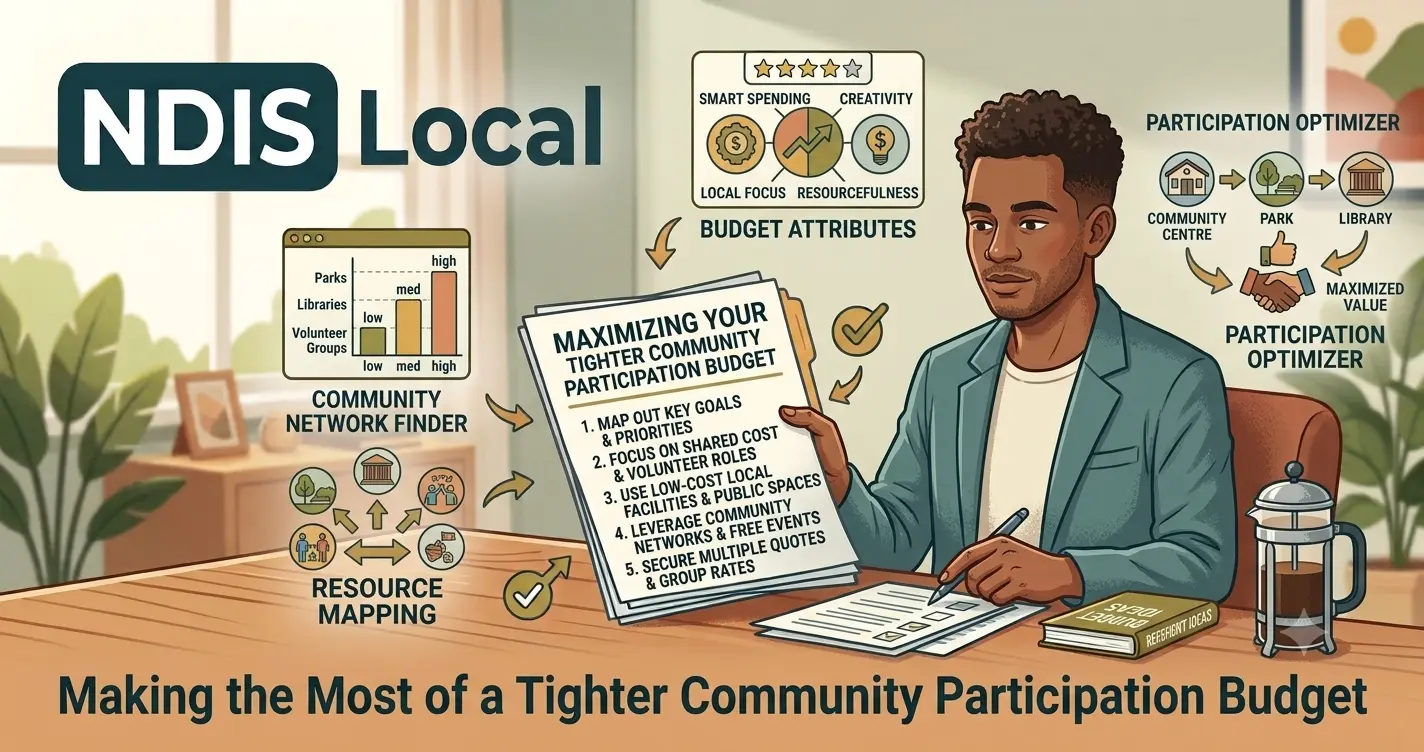
Making the Most of a Tighter Community Participation Budget
After years in this sector, I’ve watched community participation funding change more lives than almost any other line item in the NDIS. It’s also the category facing the biggest squeeze this year, with budgets being progressively adjusted from October 2026. I wrote about the policy detail of that in an earlier post — this guide is the practical follow-up, for participants and families actually living through it: how to protect what matters most in your week when the funding around it is shrinking.
Start by understanding what’s actually changing
Not every plan is affected the same way, and not every dollar of allocated funding is being cut evenly. If a chunk of your community participation budget currently goes unused, the practical impact on you may be smaller than the headline figures suggest. The adjustments are also being phased in progressively rather than landing all at once. The first thing I’d do is talk directly to your support coordinator or plan manager about exactly how the changes apply to your specific plan and reassessment timing, rather than assuming the worst from what you’ve seen shared online.
Get honest about what’s actually delivering value
This is uncomfortable but useful. Sit down and genuinely assess each activity your community participation funding currently supports. Which ones are building real skills, connection, or independence — and which have become routine more out of habit than intention? I’m not suggesting you cut anything you value, but if funding is tightening, understanding where your current spend delivers the most genuine benefit helps you make deliberate choices rather than having cuts happen to you by default.
Group-based support: the highest-value lever most families haven’t pulled yet
This is the single biggest practical shift I’d recommend if your budget is under pressure. One-on-one support worker time is expensive per hour; group-based activities split that cost across several participants while often delivering just as much — sometimes more — social benefit. A support worker taking three or four participants to the same community program stretches funding much further than the same worker supporting one person at a time, and the social element of doing something alongside peers is genuinely valuable in its own right, not just a cost-saving compromise.
If you’re not currently using any group-based options, ask your provider directly what’s available. Good providers are actively building more of these programs right now, precisely because they know funding pressure is pushing demand this way.
Look beyond the NDIS for the activity itself, not just the support
Remember that NDIS community participation funding typically pays for the support worker’s time and transport — not the activity fee itself. That means the actual activities you choose can often be found more cheaply, or even free, outside expensive specialist programs. Local councils, community centres, and mainstream sports and arts organisations frequently run low-cost or subsidised programs that welcome participants with disability. Pairing a genuinely low-cost or free community activity with your paid support hours stretches your funding considerably further than defaulting to premium disability-specific programs every time.
There’s also a dedicated push underway to build capability within exactly these kinds of mainstream community organisations — sports clubs, arts groups, volunteer programs — specifically so more genuine participation opportunities exist outside NDIS-funded settings altogether. It’s still early days for how well this plays out on the ground, but it’s worth watching in your local area and asking your provider or coordinator whether any local organisations are involved.
Protect what matters most, deliberately
If you do need to make choices about where funding goes, I’d always encourage prioritising activities with a genuine track record of benefit over ones that are simply familiar. A social connection that’s clearly reduced isolation or a program that’s visibly built confidence and independence is worth protecting even if it means trimming something else. This is also exactly the kind of evidence worth documenting ahead of your next plan reassessment — specific, real outcomes carry far more weight in that conversation than a general description of “goes to social group.”
Talk to your provider about flexibility
Good providers can often work with you on how support hours are structured to get more out of a tightening budget — combining transport more efficiently, coordinating timing so support workers can serve multiple clients in the same session, or adjusting activity choices to lower-cost options without losing the social value. This is a conversation worth having proactively rather than only once your funding is visibly running short.
My honest advice, closing out this series
I’ll be straight with you: I think this funding category matters more than a budget line suggests, and I don’t think every dollar of the coming reduction will be painless for every participant. But I’ve also seen, over eight years, that thoughtful use of community participation funding — group activities, mainstream community partnerships, and a clear sense of what’s actually delivering value — often achieves just as much connection and independence as a bigger, less deliberate budget ever did. The families who come through funding changes like this best aren’t the ones with the most money; they’re the ones who understand their plan well enough to make it work hard for them.
That’s really been the thread running through this whole series — understanding your plan, preparing properly for your reassessment, choosing the right people to support you, and using your funding deliberately. None of it removes the very real pressure the sector is under right now, but all of it puts you in a stronger position to navigate it. I hope these guides have helped, and as always, if something in your own plan doesn’t add up, don’t sit with the confusion — ask your coordinator, your plan manager, or your provider directly. That’s what we’re there for.
