
NDIS Funding Cuts Spark Concerns for Participants & Carers
NDIS Funding Cuts: A Family’s Fight for Safe Care at Home
Critical Care at Risk: Goondiwindi Family’s NDIS Struggle
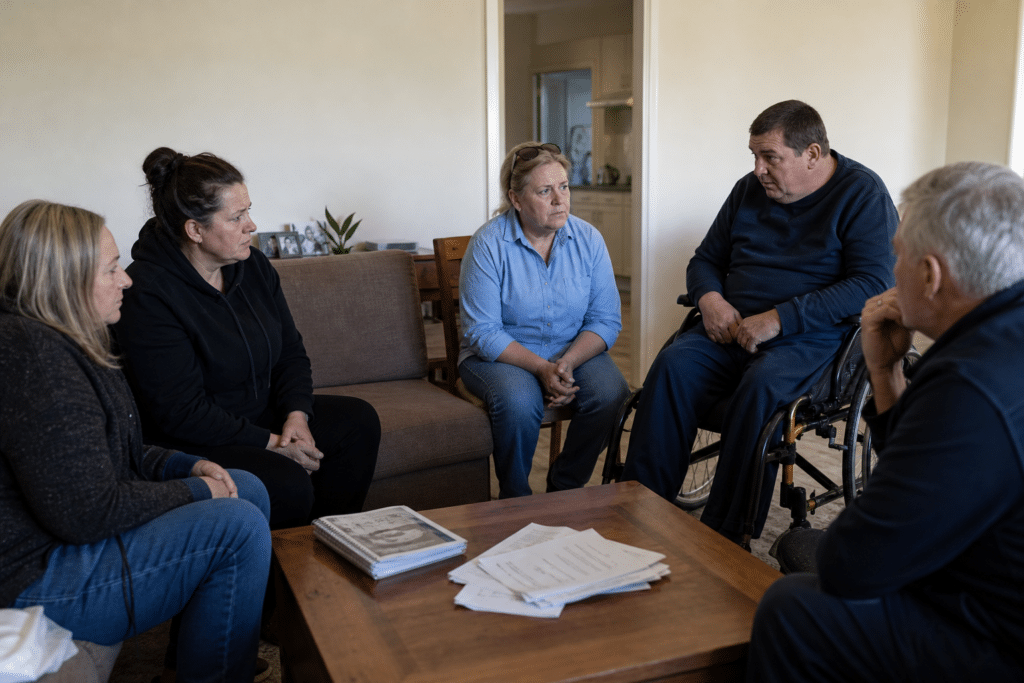
A Goondiwindi family is sounding the alarm over changes to their loved one’s National Disability Insurance Scheme (NDIS) funding. The family and Shane Danes’ care provider are deeply concerned about the 64-year-old’s safety and his ability to remain living at home following significant reductions in his support plan.
Shane lives with an acquired brain injury and a spinal cord injury, sustained from a car crash 44 years ago and a fall in 2022. He requires round-the-clock care to manage his complex needs.
When Funding Falls Short: The Daily Reality
Shane’s NDIS funding saw a reduction in October 2025 and again in April 2026. Despite the family’s efforts to have his previous funding level restored, the cuts have created critical gaps in his daily care.
These reductions mean Shane’s parents, Toni and Merven Danes, both aged 90, now step in to support him for two hours every evening. The family also highlighted a worrying gap between 6 am and 7 am each day, during which Shane is left alone despite their belief that he requires support during this period.
Providers Go the Extra Mile
Michelle Doughty, Shane’s care provider, described a distressing incident on April 21. Arriving early, she found him vomiting, fearing the outcome could have been tragic without immediate assistance. This experience underscores the serious risks posed by insufficient care hours.
To help maintain essential care, Ms. Doughty’s company has taken the extraordinary step of reducing what it charges the NDIS. This allows them to provide additional hours of support for Shane, even though it means they are “barely breaking even” financially.
A Family’s Unpaid Care Burden
Shane’s sister, Tracy Sullivan, explained the extensive care duties the family now performs. These include vital tasks such as assisting with transfers, managing medication, providing personal care, preparing meals, and helping with bowel and bladder management. The family’s tireless efforts are driven by a singular goal: to keep Shane out of aged care and allow him to live at home.
A Broader Picture: NDIS Funding Under Scrutiny
The situation faced by Shane Danes’ family is unfortunately not unique. Independent disability advocate Alyce Nelligan observed that such scenarios are increasingly common. Reports indicate that more than $2.8 billion was cut from NDIS participant plans across the country between July 2024 and March 2026.
These widespread reductions can leave participants and their families scrambling to cover essential supports, creating immense stress and potentially compromising safety and wellbeing. It often shifts the burden onto unpaid family carers and puts significant pressure on disability service providers.
The NDIA’s Stance
When asked about the matter, an NDIA spokesperson stated that participant safety and care are a top priority. They also confirmed that all relevant information is carefully considered when decisions about funding and supports are made.
What This Means For You: Navigating NDIS Plan Changes
The story of Shane Danes’ family highlights the challenges many NDIS participants and their families are facing. If you are an NDIS participant or a carer experiencing changes to your plan:
- Review Your Plan Carefully: Understand exactly what has changed and how it impacts your approved supports.
- Seek Advocacy: Don’t navigate these complex issues alone. Contact an independent disability advocate or advocacy organisation. They can provide guidance, help you understand your rights, and support you through reviews or appeals.
- Gather Evidence: Document how current funding levels affect daily life, safety, and wellbeing. This evidence is crucial for appealing decisions.
- Connect with Others: Share your experiences and seek advice from other participants, families, and providers. Collective voices can bring about positive change.
The NDIS was designed to provide reasonable and necessary supports to help people with disability live an ordinary life. Advocating for fair and adequate funding ensures the scheme continues to meet its vital purpose.